Public Release: 24-Nov-2016 University of East Anglia Pesticide regulation, diversified farming systems and long-term monitoring are all ways governments can help to secure the future of pollinators such as bees, flies and wasps, according to scientists. In an… Read More ›
Environmental
Will these Radioactive Spiders give me super powers?
First study to link antibiotic resistance with exposure to a common disinfectant
Public Release: 31-Oct-2016 First study to link antibiotic resistance with exposure to the disinfectant chlorhexidine American Society for Microbiology Washington, DC – October 31, 2016 – Klebsiella pneumoniae bacteria exposed to chlorhexidine-containing disinfectants can become resistant to colistin, a last… Read More ›
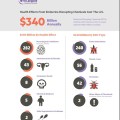
Yearly exposure to chemicals dangerous to hormone function burdens Americans with hundreds of billions in health care costs and lost earnings
Public Release: 17-Oct-2016 NYU Langone Medical Center / New York University School of Medicine Caption Annual health care costs and lost earnings in the United States from low-level but daily exposure to hazardous chemicals commonly found in plastic… Read More ›
Some compounds commonly regarded as ‘bee-safe’ could be a major contributor to honey bee colony losses in North America
Public Release: 7-Oct-2016 High number of pesticides within colonies linked to honey bee deaths University of Maryland Honey bee colonies in the United States have been dying at high rates for over a decade, and agricultural pesticides–including fungicides,… Read More ›
More than 10 percent of Americans have high concentrations of persistent pollutants
Public Release: 6-Oct-2016 Number of contaminants is related to race, poverty, age and body mass index Universitat Autonoma de Barcelona POPs are a group of chemical contaminants that humans can barely excrete and that degrade very slowly, therefore… Read More ›
92% of the world’s population exposed to unsafe levels of air pollution
Date: September 27, 2016 Source: World Health Organization Summary: A new WHO air quality model confirms that 92% of the world’s population lives in places where air quality levels exceed WHO limits. Some 3 million deaths a year are… Read More ›
The next Nuclear disaster may happen much sooner than the public realizes
Risk of another Chernobyl or Fukushima type accident plausible, experts say Date: September 19, 2016 Source: University of Sussex Summary: The biggest-ever statistical analysis of historical accidents suggests that nuclear power is an underappreciated extreme risk and that major changes… Read More ›
Chemical exposure linked to lower vitamin D levels
Date: September 20, 2016 Source: Endocrine Society Summary: Exposure to bisphenol A (BPA) and other endocrine-disrupting chemicals (EDCs) may reduce levels of vitamin D in the bloodstream, according to a new study. FULL STORY Exposure to bisphenol A… Read More ›
Exposure to chemicals released during fracking may harm fertility
Public Release: 25-Aug-2016 Endocrine-disrupting chemicals linked to altered hormone levels, ovarian development in mice University of Missouri-Columbia COLUMBIA, Mo. – More than 15 million Americans live within a one-mile radius of unconventional oil and gas (UOG) operations. UOGs… Read More ›
New study: Neonicotinoid insecticides linked to wild bee decline across England
Public Release: 16-Aug-2016 Centre for Ecology & Hydrology Exposure to neonicotinoid seed treated oilseed rape crops has been linked to long-term population decline of wild bee species across the English countryside, according to research published today in Nature Communications…. Read More ›
Long-term health effects of Hiroshima and Nagasaki atomic bombs not as dire as perceived
“Taking into consideration all causes of death, this relatively high dose reduced average lifespan by approximately 1.3 years. “ Public Release: 11-Aug-2016 Article highlights mismatch between public perception and decades of research on nearly 200,000 survivors and their children… Read More ›
Monsanto Says Bay Area Cities Can’t Sue It for Polluting SF Bay
By MATTHEW RENDA SAN JOSE (CN) – Whether a landmark environmental lawsuit moves forward may hinge on who owns the rain, Monsanto says in fighting a lawsuit from Oakland, Berkeley and San Jose. The cities sued Monsanto… Read More ›
Unsafe levels of fluorinated compounds found in drinking water for 6 million Americans
Public Release: 9-Aug-2016 Unsafe levels of toxic chemicals found in drinking water for 6 million Americans Drinking water samples near industrial sites, military fire training areas, wastewater treatment plants have highest levels of fluorinated compounds Harvard T.H. Chan School of… Read More ›
For the first time in history, high blood pressure is more common in lower-income countries
Public Release: 8-Aug-2016 For the first time in history, high blood pressure is more common in lower-income countries American Heart Association Rapid Access Journal Report American Heart Association DALLAS, August 8, 2016 — For the first time in history, people… Read More ›
Melting ice sheet could release frozen Cold War-era waste from “ Project Iceworm “
Public Release: 4-Aug-2016 American Geophysical Union WASHINGTON, DC — Climate change could remobilize abandoned hazardous waste thought to be buried forever beneath the Greenland Ice Sheet, new research finds. Camp Century, a U.S. military base built within the Greenland… Read More ›
A new leaf: Scientists turn carbon dioxide back into fuel
Public Release: 1-Aug-2016 DOE/Argonne National Laboratory Argonne, Ill. (July 29, 2016) — As scientists and policymakers around the world try to combat the increasing rate of climate change, they have focused on the chief culprit: carbon dioxide. Produced by… Read More ›
Burying Greenhouse Gas a Viable Idea, Study Finds
By SEAN DUFFY (CN) — Storing massive amounts of carbon dioxide underground may be a more effective tool for limiting global climate change than previously thought, a study released Thursday says. The study, published in the journal Nature… Read More ›
Research reveals widespread herbicide use on North American wildlands
Public Release: 29-Jun-2016 The University of Montana MISSOULA, Montana – University of Montana researchers are giving the public its first look at the widespread use of herbicides on federal and tribal land in North America, and they urge land… Read More ›
Scientists engineer bacteria to create sugar from the greenhouse gas carbon dioxide
Public Release: 23-Jun-2016 Eating air, making fuel Weizmann Institute of Science IMAGE: Weizmann Institute scientists engineer bacteria to create sugar from the greenhouse gas carbon dioxide. Credit: Weizmann Institute of Science All life on the planet relies, in… Read More ›
Pharmaceuticals in streams may come from multiple sources
Public Release: 8-Jun-2016 American Chemical Society Pharmaceuticals in surface water such as lakes and streams are a growing concern. They can cause developmental and other health issues in aquatic life. Scientists have largely considered treated wastewater that’s released into… Read More ›
Residents concerned about use of genetically modified mosquitoes to curb insect population
Public Release: 6-Jun-2016 Small survey suggests reasons for lack of support for novel way to combat mosquito that carries Zika, dengue, chikungunya Johns Hopkins University Bloomberg School of Public Health A small survey of residents of a Florida Keys… Read More ›
Quaker Oats on list of tainted oatmeals in FDA inspection
By Christine Chou, The China PostMay 27, 2016, 12:27 am TWN TAIPEI, Taiwan — Oatmeal products from major food brand Quaker Oats were found to contain traces of a carcinogenic chemical called glyphosate, according to the results of an… Read More ›
Triclosan ( Soap ) may now actually be in the food you eat
Public Release: 25-May-2016 Following tricky triclosan Antibacterial product flows through streams, crops American Society of Agronomy IMAGE: Students collect soil samples after flooding of the Rio Grande floodplain to determine triclosan levels in soils. Credit: Photo credit Monica Mendez…. Read More ›
Monsanto accused of criminal cover up overs PCBs, Long Beach Sues
Long Beach Sues Monsanto Over PCBs “While the scientific community and Monsanto knew that PCBs were toxic and becoming a global contaminant, Monsanto repeatedly misrepresented these facts, telling governmental entities the exact opposite — that the compounds were not toxic… Read More ›
Tiny organisms have huge effect on world’s atmosphere
Public Release: 16-May-2016 University of East Anglia Scientists at the University of East Anglia have discovered how a tiny yet abundant ocean organism helps regulate the Earth’s climate. Research published today in Nature Microbiology reveals how a bacterial group… Read More ›
9% chance of a Magnitude 9+ earthquake in the Aleutians in the next 50 years
Public Release: 12-May-2016 New research estimates probability of mega-earthquake in the Aleutians University of Hawaii at Manoa Caption The only well-documented paleotsunami deposit in Hawai’i from the 16th century is on Kaua`i. The Makauwahi sinkhole, on the side of… Read More ›
Farmers Say Roundup Gave Them Cancer
Friday, May 13, 2016 By TED WHEELER LINCOLN, Neb. (CN) — Despite Monsanto’s claim that its Roundup weed-killer is “safe enough to drink,” four Nebraska farmers say the widely used herbicide gave them non-Hodgkin’s lymphoma. The World Health Organization’s… Read More ›
Nation’s beekeepers lost 44 percent of bees in 2015-16
Public Release: 10-May-2016 Summer losses rival winter losses for the second year running University of Maryland This chart presents ten years’ worth of results from an annual survey of honey bee colony loss conducted by the Bee Informed… Read More ›
Study finds declining sulfur levels
Public Release: 9-May-2016 University of Illinois College of Agricultural, Consumer and Environmental Sciences With the move from burning coal to natural gas and low-sulfur coal and an increase in the use of scrubbers, only about 25 percent as… Read More ›
Nuclear regulator says fault below Shika reactor may be active
N APR. 27, 2016 – 04:22PM JST ( 14 ) TOKYO — The nuclear safety body said Wednesday it has accepted the conclusion by geological experts that a fault below a reactor at Hokuriku Electric Power Co’s Shika nuclear… Read More ›
Mexican researchers observe natural insect control without pesticides
Public Release: 20-Apr-2016 Entomological Society of America Scale insects known as cochineals are major pests of prickly pear in Mexico, and pesticides are often used to control them. However, one prickly pear farmer has been controlling them without the… Read More ›
Phosphorus ‘tax’ could be huge if tropical farming intensifies
Public Release: 18-Apr-2016 Brown University IMAGE: A map showing where farms are, whether they are on phosphorus fixing soil (purple) or not (green), and how intensive farming is there (darkness of pixel). Credit: Roy et. al., Nature Plants…. Read More ›
Vegetables irrigated with treated wastewater expose consumers to drugs
Public Release: 18-Apr-2016 Hebrew University and Hadassah Medical Center researchers show the link between exposure to pharmaceutical contaminants and consumption of fresh produce grown in reclaimed wastewater-irrigated soil The Hebrew University of Jerusalem IMAGE: Research showed that healthy… Read More ›
Pollutants in fish inhibit human’s natural defense system
Public Release: 15-Apr-2016 Scripps researchers suggest risk assessment to protect human health University of California – San Diego In a new study, environmental pollutants found in fish were shown to obstruct the human body’s natural defense system to… Read More ›
Japan prepares for release of tritium from Fukushima plant
By YURI KAGEYAMA NATIONAL APR. 12, 2016 – 04:55PM JST TOKYO — To dump or not to dump a little-discussed substance is the question brewing in Japan as it grapples with the aftermath of the nuclear catastrophe in Fukushima… Read More ›
Six to 10 million years ago: Ice-free summers at the North Pole
Public Release: 7-Apr-2016 Geoscientists are closing important knowledge gaps in the climate history of the Arctic Ocean Alfred Wegener Institute, Helmholtz Centre for Polar and Marine Research An international team of scientists led by the Alfred Wegener Institute… Read More ›
What does ‘Planet Nine’ look like? Scientists model the planet’s size and temperature
by Chuck Bednar Originally detected back in January, the mysterious object thought to be a ninth planet in the solar system has commanded a lot of attention in the scientific community, and now University of Bern astrophysicists have shed… Read More ›
Proof that ancient supernovae zapped Earth sparks hunt for after effects
Public Release: 6-Apr-2016 University of Kansas LAWRENCE — Two new papers appearing in the journal Nature this week are “slam-dunk” evidence that energies from supernovae have buffeted our planet, according to astrophysicist Adrian Melott of the University of Kansas…. Read More ›
Attention deficit after kids’ critical illness linked to plasticizers in medical tubes
Public Release: 1-Apr-2016 The Endocrine Society Boston, MA– Children who are often hospitalized in intensive care units are more likely to have attention deficit disorders later, and new research finds a possible culprit: a high level of plastic-softening chemicals… Read More ›
Could a new class of fungicides play a role in autism, neurodegenerative diseases?
Public Release: 31-Mar-2016 A new UNC School of Medicine study shows how chemicals designed to protect crops can cause gene expression changes in mouse brain cells that look strikingly similar to changes in the brains of people with autism… Read More ›
US autism rate unchanged in new CDC report
Researchers say it’s too early to tell if rate has stabilized one in 68 children in the 2014 report that looked at 2010 data one in 88 children in the 2012 report that looked at 2008 data one in 110… Read More ›
Regulators OK underground ice wall around Fukushima plant
By MARI YAMAGUCHI NATIONAL MAR. 31, 2016 – 06:50AM JST TOKYO — Japanese regulators on Wednesday approved the use of a giant refrigeration system to create an unprecedented underground frozen barrier around buildings at the wrecked Fukushima nuclear plant… Read More ›
Many industrialized countries may now facing population extinction ?
“Japan has been worrying for a while now about whether its population may one day become extinct. In 2006, the Japanese National Institute of Population and Social Security Research predicted that by the end of the present century, population would… Read More ›
Plants boost extreme temperatures by 5°C ?
Public Release: 21-Mar-2016 Improved plant types in climate model show significant impact on temperatures resulting from earlier spring greening University of New South Wales Heatwaves from Europe to China are likely to be more intense and result in maximum… Read More ›
Eastern Monarch butterflies at risk of extinction unless numbers increase
Public Release: 21-Mar-2016 United States Geological Survey Long-term declines in the overwintering Eastern population of North American monarch butterflies are significantly increasing their likelihood of becoming extinct over the next two decades, according to Scripps Institution of Oceanography… Read More ›
India to Monsanto: Share Profits or Get Lost
Thursday, 17 March 2016 India said that US agricultural biotechnology corporation Monsanto is free to leave the Indian market and lose its 90 percent dominance if it does not want to accept the government-imposed price and royalty cuts for… Read More ›
Fertilizer applied to fields today will pollute water for decades
Public Release: 14-Mar-2016 University of Waterloo Dangerous nitrate levels in drinking water could persist for decades, increasing the risk for blue baby syndrome and other serious health concerns, according to a new study published by researchers at the University… Read More ›
U.S. FDA finds "no significant impact" on environment from Zika-fighting mosquitoes
Source: Xinhua 2016-03-12 04:49:56 WASHINGTON, March 11 (Xinhua) — Genetically engineered mosquitoes, made by British biotech company Oxitec and currently being used in the fight against the Zika virus, will not result in a significant impact on the environment,… Read More ›
India shuts down nuclear plant following leak
Source: Xinhua 2016-03-11 23:18:58 NEW DELHI, March 11 (Xinhua) — Authorities in India’s western state of Gujarat Friday shut down a nuclear power plant and declared an emergency, following a heavy water leak in one of the reactors, officials… Read More ›
57 different pesticides found in poisoned honeybees
Public Release: 10-Mar-2016 A new method to detect a wide range of pesticides could help save bee populations Elsevier Amsterdam, February 10, 2016 – European honeybees are being poisoned with up to 57 different pesticides, according to new research… Read More ›
 Engineering Evil